


Post Contents
Last checked: 1 July 2026
There is no fixed list of disabilities that automatically qualify someone for a Council Tax reduction. Instead, eligibility depends on which form of support is being claimed.
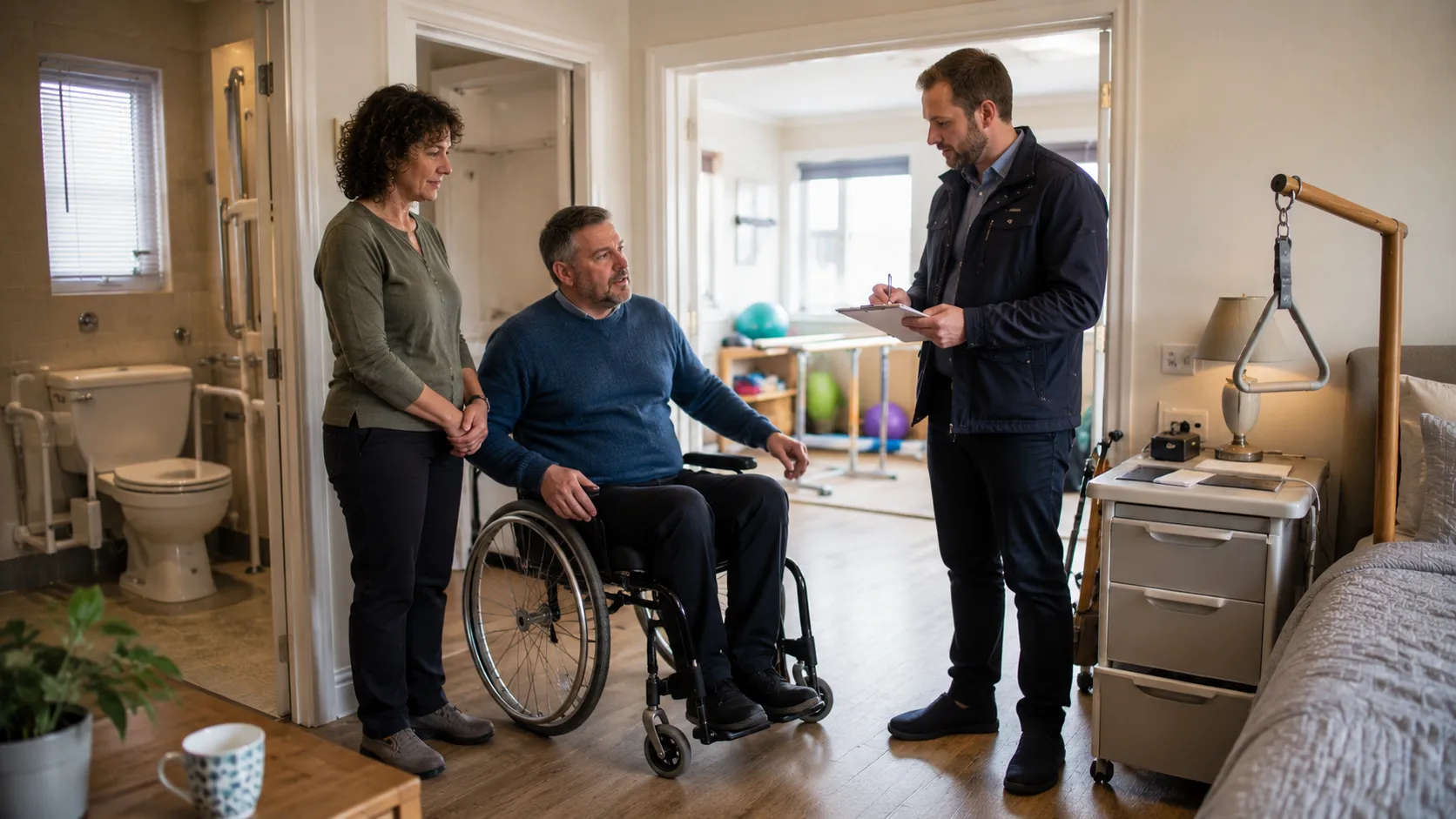
A disabled person or their household may qualify because the property contains an additional room, bathroom, kitchen or indoor wheelchair space needed because of the disability.
Someone who meets the legal definition of severe mental impairment may also be disregarded when the Council Tax bill is calculated. Separately, people on a low income may qualify for means-tested Council Tax Reduction.
Receiving Personal Independence Payment, Disability Living Allowance or Attendance Allowance may be relevant to an application, but receiving a disability benefit does not automatically reduce the Council Tax bill.
This article provides general information and is not financial or legal advice. The relevant council or authority makes the final decision based on the applicant’s circumstances.
What Are the Main Ways a Disabled Person Can Pay Less Council Tax?

The term “Council Tax Reduction” is often used broadly, but several different schemes may lower a disabled person’s bill. Understanding the difference is important because each route has its own eligibility rules.
Disabled Band Reduction
Disabled Band Reduction is based mainly on the property rather than the household’s income. It may apply where the home is larger than it would otherwise need to be because it contains an additional room or facility required by a disabled resident.
If the application is approved, the bill is normally calculated using the Council Tax band immediately below the property’s actual band.
For example, someone living in a Band D property would pay the Band C rate. A qualifying Band A property receives a 17% reduction because there is no lower band. Mental Impairment Discount or Exemption
A person who is medically certified as severely mentally impaired and meets the qualifying-benefit conditions may be disregarded when the Council Tax bill is calculated.
The amount taken off depends on who else lives in the property. The household may receive a 25% or 50% discount, while a 100% exemption can apply in certain circumstances, including where a qualifying person lives alone. Means-Tested Council Tax Reduction
Council Tax Reduction, sometimes called Council Tax Support, is a separate means-tested scheme intended mainly for people on a low income or receiving certain benefits.
The amount awarded can depend on the applicant’s income, savings, partner’s income, children, other adults in the property and the local scheme. A person can apply whether they own or rent their home and whether they are working or unemployed.
The bill may be reduced by up to 100%, but this is not guaranteed. An applicant may qualify under more than one route, so applicants should check disability-related discounts as well as means-tested support.
Is There a List of Disabilities That Qualify for Council Tax Reduction?
There is no national list of medical conditions that automatically qualify someone for a Council Tax reduction.
Conditions such as dementia, Alzheimer’s disease, learning disabilities, brain injuries, neurological conditions, mobility impairments or long-term physical illnesses may be relevant. However, the name of the condition is not normally the deciding factor.
For Disabled Band Reduction, the council considers whether the home contains a qualifying room, facility or wheelchair space that is required because of the disability.
For a severe mental impairment discount, a medical professional must certify that the person has a severe and apparently permanent impairment of intelligence and social functioning. The person must also meet the qualifying-benefit requirement.
For means-tested Council Tax Reduction, the council mainly considers the applicant’s income, savings, household and local scheme rules rather than the diagnosis alone.
This means two people with the same condition could receive different decisions because their homes, household arrangements, benefit entitlement or financial circumstances are different.
What Property Features Can Qualify for Disabled Band Reduction?
A household may qualify for Disabled Band Reduction where at least one disabled adult or child uses the property as their main home and the property contains one of the required features.
Qualifying features can include:
- An additional bathroom needed by the disabled person
- An additional kitchen required because of the disability
- Another room mainly used to meet the disabled person’s needs
- Additional indoor floor space required to use a wheelchair
A room does not qualify merely because the disabled person uses it. There must be a clear connection between the room or facility and the person’s disability-related needs.
For example, a room used mainly for dialysis, therapy or essential disability equipment may potentially qualify. An ordinary bedroom will not necessarily qualify simply because it is occupied by a disabled person.
The property does not always need to have undergone major structural alterations. However, the council must be satisfied that the home contains a qualifying feature and that the household requires it because of the disability. The disabled resident can be either an adult or a child and does not need to be the person named on the Council Tax bill.
How Does the Severe Mental Impairment Council Tax Discount Work?

Severe mental impairment has a specific meaning under Council Tax rules. It is not the same as having a mental health diagnosis, and conditions such as anxiety, depression or bipolar disorder do not automatically meet the test.
To qualify, the person normally needs:
- Certification from a medical professional, such as a GP
- A severe and apparently permanent impairment of intelligence and social functioning
- Entitlement to one of the benefits recognised under the Council Tax rules
The person may be disregarded when the council counts the number of adults living in the property.
The possible reduction depends on the household:
| Household circumstances | Possible Council Tax outcome |
| A qualifying person lives alone | 100% exemption |
| All other adults are also severely mentally impaired or full-time students | 100% exemption |
| Everyone else in the household is disregarded | 50% discount may apply |
| One chargeable adult lives with the qualifying person | 25% discount may apply |
| Two or more chargeable adults remain | An SMI discount may not reduce the bill |
The council will check the full household circumstances before confirming the percentage
Does PIP Automatically Qualify Someone for Council Tax Reduction?
Receiving Personal Independence Payment does not automatically qualify someone for a Council Tax reduction.
PIP may still be relevant in several ways. It can provide evidence that the person has disability-related daily living or mobility needs.
A particular component of PIP may also meet part of the qualifying-benefit requirement for a severe mental impairment application.
However, PIP alone does not prove that:
- The property meets the Disabled Band Reduction conditions
- The applicant meets the severe mental impairment definition
- The household qualifies under the local means-tested Council Tax Reduction scheme
Someone receiving PIP may therefore be refused one form of Council Tax help while qualifying for another. Equally, a person may qualify for Disabled Band Reduction without receiving PIP if the home and disability-related facilities meet the required conditions.
Applicants should check every available route rather than assuming their PIP award either guarantees or prevents a reduction.
How Can Someone Apply for Disability-Related Council Tax Help?
Applications are normally made through the council responsible for the property. There is no single national application covering every household.
Step 1: Identify the Correct Scheme
The applicant should first establish whether they are applying for:
- Disabled Band Reduction
- A severe mental impairment discount or exemption
- Means-tested Council Tax Reduction
- Another discount, such as a carer or single-person discount
Using the wrong form could delay the decision.
Step 2: Find the Application Form
The relevant form should be available on the local council’s website. Applicants who cannot complete an online form can contact the council and ask whether a paper form or telephone assistance is available.
Step 3: Gather the Evidence
Depending on the scheme, the council may request:
- Proof of identity and address
- The Council Tax account number
- National Insurance numbers
- Benefit award letters
- Income, savings and bank-account information
- Details of everyone living in the property
- Medical certification
- Information about disability-related rooms or facilities
- Photographs, plans or evidence of adaptations
Step 4: Submit the Application
The applicant should answer every relevant question and explain clearly how the room, facility or household circumstances meet the scheme’s conditions.
Copies of the completed form and all supporting documents should be kept. Where documents are posted, proof of postage can also be useful.
Step 5: Continue Paying the Existing Bill
Submitting an application does not normally suspend the current Council Tax bill. The household should continue paying the amount requested unless the council issues a revised bill or agrees to another arrangement.
If the application succeeds, the council will explain when the reduction starts and whether an overpayment will be refunded or credited.
What Are the Most Common Council Tax Disability Myths?
Several misunderstandings can prevent eligible households from applying or cause applicants to use the wrong scheme.
Myth: Every Disability Qualifies
There is no automatic qualifying-disability list. The decision depends on the scheme’s property, medical, benefit, financial or household conditions.
Myth: Receiving PIP Guarantees a Discount
PIP can support an application but does not by itself establish entitlement to Disabled Band Reduction or means-tested Council Tax Reduction.
Myth: Only Physical Disabilities Count
Disabled Band Reduction may apply to facilities needed because of physical, cognitive, neurological or other disabilities. Severe mental impairment rules may also apply where the specific legal and benefit conditions are satisfied.
Myth: The Applicant Must Be the Disabled Person
The disabled person does not need to be responsible for paying the Council Tax. A qualifying adult or child only needs to use the property as their main home for Disabled Band Reduction purposes. Savings Prevent Every Disability Discount
Disabled Band Reduction is not the same as means-tested Council Tax Reduction. Income and savings may affect means-tested support but are not the central test for the property-based band reduction.
Myth: Universal Credit Automatically Includes Council Tax Support
Council Tax Reduction is generally claimed separately through the council. A Universal Credit award does not necessarily mean the council has received or approved a Council Tax Reduction application.
How Much Could a Disability-Related Reduction Save?
The amount saved depends on the route through which the household qualifies.
Disabled Band Reduction normally moves the bill down by one Council Tax band. A Band D property would therefore be charged at the Band C rate.
A qualifying Band A property receives a 17% reduction. Under the severe mental impairment rules, the reduction may be 25%, 50% or 100%, depending on the other adults living in the property and whether they are counted for Council Tax.
Means-tested Council Tax Reduction can lower the bill by up to 100%, but each council runs its own scheme for working-age applicants. The amount can be affected by income, savings, benefits, household composition and other adults living in the home.
Older people may also qualify for a single-person discount, carer disregard, student exemption or another form of support. The council should consider how the different rules interact before issuing the revised bill.
Are the Disability Reduction Rules the Same Across the UK?

The rules and terminology are not identical throughout the UK.
England and Wales use Council Tax, although local application processes and means-tested support schemes can differ. Scotland also has Council Tax and operates its own Council Tax Reduction arrangements.
Northern Ireland does not use Council Tax. Domestic properties are subject to rates instead. A household in Northern Ireland may qualify for Disabled Persons Allowance where a disabled person lives in an adapted property or one containing qualifying additional facilities.
The Northern Ireland allowance provides a 25% reduction in domestic rates and is not affected by income or savings. Having a disability alone is not enough; there must be a clear link between the person’s needs and the qualifying adaptation or facility.
Conclusion
There is no single list of disabilities that automatically qualifies a household for a Council Tax reduction. Eligibility depends on the type of help being claimed and may be based on disability-related facilities in the home, severe mental impairment rules, household composition or financial circumstances.
Applicants should check Disabled Band Reduction, severe mental impairment discounts and means-tested Council Tax Reduction separately. Providing clear medical, financial and property evidence can help the council reach an accurate decision.
Anyone who believes an application has been wrongly refused can ask the council to reconsider the decision and may have a right of appeal.
Frequently Asked Questions
Can a Disabled Child Qualify a Household for Disabled Band Reduction?
Yes. The disabled resident can be either an adult or a child, provided the property is their main home and contains a qualifying facility or indoor wheelchair space needed because of the disability.
Does a Wet Room Automatically Qualify for a Council Tax Reduction?
Not automatically. The council will consider whether it is an additional bathroom and whether it is required to meet the disabled person’s needs. Replacing the household’s only bathroom with a wet room may not by itself satisfy the additional-facility condition.
Can a Bedroom Count as a Disability-Related Room?
A bedroom does not qualify merely because a disabled person sleeps in it. It may be considered where it is additional to the rooms the household would normally require and is predominantly needed because of the disability.
Do Savings Affect Disabled Band Reduction?
Disabled Band Reduction is property-based and is not normally means-tested. However, savings can affect a separate application for means-tested Council Tax Reduction.
Can a Carer Receive a Council Tax Discount?
Some carers may be disregarded when Council Tax is calculated, but conditions relating to the care provided, the relationship between the people and any payment received can apply. The carer should check the rules with the council.
Can Disabled Band Reduction Be Combined With Council Tax Reduction?
Potentially, yes. The band reduction can lower the amount on which the bill is calculated, while means-tested Council Tax Reduction may provide further help. The council will calculate how the schemes interact.
How We Checked This?
Last checked: 1 July 2026
This article was reviewed against current UK government, devolved-government, tribunal and disability-support guidance on Council Tax reductions for disabled people.
The fact-checking process included:
- Confirming that there is no single list of disabilities that automatically qualifies someone for a Council Tax reduction.
- Separating the property-based Disabled Band Reduction Scheme from means-tested Council Tax Reduction.
- Checking which additional rooms, facilities and indoor wheelchair spaces may qualify under the Disabled Band Reduction Scheme.
- Confirming the medical-certification and qualifying-benefit requirements for a severe mental impairment discount.
- Checking how household composition can affect the percentage of Council Tax payable.
- Confirming that receiving PIP does not automatically guarantee every form of Council Tax reduction.
Local authorities may use different forms, evidence requirements and means-tested Council Tax Reduction schemes. Readers should therefore confirm the current rules with the council or authority responsible for their property.
Sources Used
- UK: Council Tax discounts for disabled people
Used to check the Disabled Band Reduction Scheme, qualifying property features and severe mental impairment requirements. - UK: Apply for Council Tax Reduction
Used to confirm that means-tested Council Tax Reduction is claimed through the local council and may depend on income, benefits and household circumstances. - UK: Apply for a Council Tax discount
Used to confirm the local application route for Council Tax discounts in England and Wales. - UK: Appeal a Council Tax bill or decision
Used to check the reconsideration process, the council’s response period and the requirement to continue paying the existing bill while a dispute is considered. - Valuation Tribunal: Council Tax Reduction and Support appeals
Used to check the appeal route and applicable time limits in England. - scot: Council Tax discounts, exemptions and reductions
Used to confirm the Council Tax disability, severe mental impairment and low-income support arrangements in Scotland.
