



Post Contents
Receiving a cigarette littering fine does not automatically mean it can be cancelled, but you may be able to challenge it if the wrong person was identified, the incident was genuinely accidental, the evidence is unreliable or the authority failed to follow the correct procedure.
You should check the issuing authority, alleged offence, location, payment amount and deadline shown on the Fixed Penalty Notice before taking action.
Do not ignore the notice while preparing a challenge, as missing the deadline may expose you to prosecution and a larger financial penalty.
This guide focuses mainly on littering Fixed Penalty Notices issued in England. Different procedures may apply in Scotland, Wales and Northern Ireland.
Last checked: 15 July 2026
This article is for general information only and is not legal advice.
Can You Get Out of a Cigarette Littering Fine?
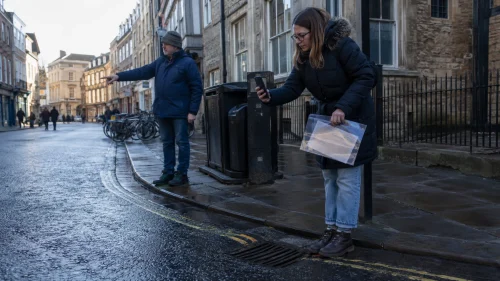
You may be able to get a cigarette littering fine cancelled if you can provide credible evidence that you did not commit the alleged offence or that enforcement would be inappropriate in the circumstances.
However, there is no guaranteed loophole for avoiding a valid fine.
Your first step should be to check whether the authority that issued the notice accepts informal challenges.
The official guidance on how to pay or challenge an environmental FPN explains that you will normally need to provide evidence showing why the penalty should not have been issued.
If the authority rejects your challenge, you will generally need to choose between paying the notice and refusing payment so that you can defend the original allegation if the authority brings the case to court.
Court action carries additional financial and legal risks, so this decision should not be taken lightly.
What Is a Cigarette Littering Fixed Penalty Notice?
A Fixed Penalty Notice, commonly called an FPN, is an opportunity to discharge liability for an alleged offence without being prosecuted in court. It is not the same as an immediate criminal conviction.
Under the legal definition of leaving litter, an offence may be committed when someone throws down, drops or otherwise deposits litter in a place covered by the law and leaves it there. Cigarette ends, filters, packets and related smoking waste can count as litter.
Putting a cigarette end into a drain, gutter, stream or other unsuitable location does not make it properly disposed of.
Similarly, picking it up only after an enforcement officer approaches you does not necessarily remove the original allegation.
How Much Is a Cigarette Littering Fine?
The amount depends on the issuing authority and the rules applying in that part of the UK.
In England, the current permitted levels for an ordinary littering FPN are:
| Penalty level | Amount |
| Default penalty | £100 |
| Minimum full penalty | £65 |
| Maximum full penalty | £500 |
| Minimum discounted penalty | £50 |
| Maximum court fine following conviction | £2,500 |
The council does not have to use the default amount. Your own notice should state the amount due, whether an early-payment discount is available and the payment deadline.
You will usually have at least 14 days before prosecution can begin, but you must follow the date printed on your notice rather than assuming that every council uses exactly the same payment period.
Why Are Cigarette Littering Fines Issued?
A cigarette littering FPN may be issued where an authorised officer has reason to believe that someone deliberately dropped or deposited cigarette waste and left it behind.
Common examples include:
- Dropping a cigarette butt on the pavement and walking away
- Flicking a cigarette end into the road
- Placing a cigarette into a drain or gutter
- Leaving cigarette packets, filters or rolling papers behind
- Throwing a cigarette from a vehicle
- Leaving smoking waste in a park, beach or other public area
An authority should have sufficient evidence to support prosecution if the FPN is not paid. Evidence may include the officer’s direct observations, written notes, photographs, video footage, CCTV or a witness statement.
What Should You Do After Receiving the Fine?
Follow these steps before paying or submitting a challenge.
1. Read the Entire Notice
Check:
- Your full name and address
- The alleged offence
- The type of litter recorded
- The date, time and location
- The issuing authority
- The officer or reference number
- The full and discounted amounts
- The payment deadline
- Instructions for disputing the allegation
A small spelling or administrative error will not automatically cancel the notice. The important question is whether the error affects the identity of the alleged offender, the alleged incident or the authority’s ability to prove the offence.
2. Check Whether the Notice Is Genuine
Use the contact information published on the council or issuing authority’s official website rather than relying only on a payment link sent by text message or email.
Contact the authority directly if the notice contains inconsistent information, requests payment through an unusual method or does not identify the alleged offence.
3. Write Down What Happened
Prepare a chronological account while the event is still fresh in your memory. Record where you were standing, what the officer said, whether you were shown identification, what item was allegedly dropped and whether anyone else witnessed the incident.
Keep your account factual. Avoid exaggerating, insulting the enforcement officer or relying on an excuse that does not address whether the offence occurred.
4. Preserve Supporting Evidence
Save photographs, video, receipts, location history, travel records, work records and witness contact details. Do not edit original photographs or recordings.
Where relevant, ask the authority to review the enforcement officer’s notes, photographs, body-worn video or other available evidence.
Government litter enforcement guidance for authorities says photographs, video footage and officer notes should be retained because they may help resolve disputes.
5. Submit the Challenge Before the Deadline
Follow the process stated on the notice or the authority’s website. Include the FPN reference number, your contact details, a clear explanation and copies of relevant evidence.
Ask the authority to:
- Review all available evidence
- Confirm whether the officer’s notes or footage support the allegation
- Cancel the FPN where the evidence does not establish the offence
- Provide written reasons if the request is rejected
- Confirm whether the payment period is paused during review
Do not assume that submitting a challenge automatically freezes the payment deadline. Ask the authority for confirmation in writing.
When Might a Cigarette Littering Fine Be Cancelled?

An authority may consider cancellation in the following circumstances.
The Wrong Person Was Identified
A strong challenge may exist where you were not the person who committed the alleged offence. Provide evidence such as photographs, travel records, work records or witness statements.
You should also explain any clear differences between you and the description recorded by the enforcement officer.
The Littering Was Genuinely Accidental
Current English enforcement guidance says an FPN should not normally be issued where littering was genuinely accidental. One example is an item falling from someone’s pocket without their knowledge.
This does not mean that describing a deliberate act as an accident will cancel the notice. The authority will consider whether there is evidence that the person intended to drop and leave the cigarette waste.
The Evidence Does Not Support the Allegation
A challenge may be appropriate where:
- The officer could not clearly see who dropped the item
- The recorded item does not match what happened
- The date, time or location is materially incorrect
- Photographs or video do not identify you
- A credible witness contradicts the allegation
- The authority’s evidence shows that the waste was not left behind
Explain the specific weakness rather than making a general claim that the council has “no proof”.
The Notice Was Issued for the Wrong Offence
An FPN must relate to an offence for which that type of penalty is available. A challenge may be justified if the conduct described on the notice does not meet the alleged littering offence or if the authority used the wrong enforcement power.
Relevant Vulnerability or Exceptional Circumstances Apply
An authority may consider whether enforcement would be disproportionate or contrary to the public interest because of a relevant vulnerability or exceptional circumstance.
Provide appropriate supporting evidence and explain how the circumstances affected the incident. Vulnerability does not automatically cancel an FPN, but the authority should consider the individual facts rather than applying its policy inflexibly.
What Evidence Should Support a Challenge?
Include evidence directly connected to your grounds for disputing the fine.
Useful evidence may include:
- The FPN and any accompanying documents
- A detailed written timeline
- Photographs or video
- Witness statements
- Receipts and travel records
- Employment or appointment records
- Vehicle sale, hire or theft records
- Relevant medical or vulnerability evidence
- Copies of previous correspondence
- Evidence showing that you were elsewhere
- Evidence that another person was responsible
Most documents do not need to be formally certified unless the authority specifically requests this. Where certification is required, see our guide explaining who can certify a document.
Which Reasons Usually Do Not Cancel the Fine?

The following arguments will generally be weak when the officer clearly observed the cigarette being dropped and left:
- There was no bin nearby.
- There was no warning sign.
- It was only one cigarette end.
- You did not know cigarette butts counted as litter.
- It was your first offence.
- You offered to pick it up after the officer intervened.
- You placed it into a drain rather than on the pavement.
- Other people were also littering.
- You believe the officer was rude.
- You cannot afford the fine.
A lack of bins does not normally create permission to drop cigarette waste. A person should extinguish the cigarette safely and retain the waste until an appropriate bin or ashtray is available.
Officer conduct can be addressed through the authority’s complaints process, but a complaint about behaviour is separate from disputing whether littering occurred.
The distinction is similar to other council-enforcement issues discussed in our guide on complaining about parking on your street.
Can You Appeal a Cigarette Littering FPN?
There is generally no formal statutory appeal tribunal for an ordinary littering FPN issued instead of prosecution. However, many authorities provide an informal process through which you can dispute liability or submit mitigating information.
If your challenge succeeds, the authority should cancel the notice and confirm that no further action will be taken.
If it is rejected, your usual options are to:
- Pay the FPN within the permitted period; or
- Decline to pay and defend the original allegation if the authority prosecutes.
Refusing payment is not a second administrative appeal. It means accepting the possibility of court proceedings, where the authority must prove the original offence. Obtain independent legal advice before taking this route where the evidence or consequences are significant.
Can Community Service or a Clean-Up Event Replace the Fine?
You should not assume that volunteering at a litter clean-up, completing community service or attending an environmental course will automatically replace or cancel an existing FPN.
An authority may sometimes decide that education or another intervention is more appropriate than enforcement, particularly before formal action is completed. However, this is discretionary and must be confirmed by the issuing authority.
Community payback is a court-ordered community sentence and is not a normal substitute that a recipient can choose instead of paying a littering FPN.
If you are unable to pay, contact the authority before the deadline. Explain your financial circumstances and ask whether it offers an extension, instalment arrangement or another option. The authority is not required to approve your request.
What Happens If You Do Not Pay the Fine?
Ignoring an FPN does not normally make it disappear. If an ordinary littering FPN remains unpaid, the authority may prosecute the original alleged offence in the magistrates’ court.
If convicted, you could face:
- A fine of up to £2,500 for littering
- Prosecution costs
- A victim surcharge
- A criminal conviction
- A total amount substantially higher than the original FPN
The court considers the original littering offence rather than simply punishing you for failing to pay the notice. The FPN gives you an opportunity to discharge liability without that prosecution.
A court fine is also different from other penalties such as a speeding fine for doing 40 in a 30 or a school absence penalty notice. Each type of penalty has its own rules, deadlines and appeal procedures.
Where a case has already reached court, our separate guide explains how to check a court fine balance in the UK. However, receiving an FPN does not itself mean that a court fine has already been registered.
What If a Cigarette Was Thrown From a Vehicle?
A cigarette thrown from a vehicle may be handled differently from an ordinary littering FPN.
Where the person who dropped the cigarette can be identified, an ordinary littering FPN may be issued to that individual.
In England outside London, where the individual litterer cannot be identified, a council may instead issue a civil littering-from-vehicles penalty to the vehicle’s keeper.
A civil vehicle penalty:
- Can make the keeper liable even if the keeper was not driving
- Does not itself carry criminal liability
- Has a formal representations and appeal procedure
- May be challenged on specified grounds
- Can be appealed to an independent adjudicator after the council rejects formal representations
Potential grounds may include that the incident did not occur, the recipient was not the vehicle’s keeper, the vehicle had been taken without consent, the notice was issued too late or the authority committed a procedural error.
Readers who receive a vehicle-related penalty should follow the instructions on that notice rather than relying only on the ordinary FPN process.
Can You Complain About the Enforcement Officer?
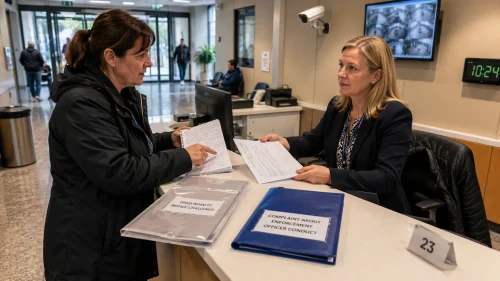
You may complain separately if you believe an enforcement officer behaved improperly, refused to show identification, made an inappropriate comment or failed to follow the authority’s published standards.
A complaint about the officer does not automatically cancel the FPN. Your challenge should address whether you committed the alleged offence, while your complaint should clearly explain the separate conduct or service issue.
Ask the authority to investigate both matters independently and provide written outcomes.
How Can You Avoid Another Cigarette Littering Fine?
Carry a portable ashtray when smoking away from a designated smoking area. Fully extinguish the cigarette and retain the end until you find a suitable bin or ashtray.
Do not place cigarette ends:
- On pavements or roads
- In drains or gutters
- In plant pots
- On beaches or grass
- From a vehicle window
- Beside an overflowing bin
Check whether the bin is suitable for cigarette waste and ensure that the cigarette is fully extinguished before disposal. Where no bin is available, keep the waste with you rather than leaving it behind.
Conclusion
You cannot lawfully avoid a valid cigarette littering fine simply because it was a first offence, there was no nearby bin or you offered to pick up the cigarette afterwards.
However, you may have grounds to challenge the notice where the wrong person was identified, the incident was genuinely accidental, the evidence is insufficient or the authority failed to follow the correct process.
Read the notice carefully, preserve your evidence and submit any challenge before the stated deadline. If the authority rejects it, weigh the cost and legal risk carefully before choosing not to pay and defending the allegation in court.
Frequently Asked Questions
1. Can You Appeal a Cigarette Littering Fine?
There is usually no formal appeal tribunal for an ordinary littering FPN, but many councils allow an informal challenge. Follow the instructions on the notice and submit supporting evidence before the deadline.
2. Can a Cigarette Littering Fine Be Cancelled?
A council may cancel the fine if the wrong person was identified, the incident was genuinely accidental, the evidence is insufficient or exceptional circumstances make enforcement inappropriate.
3. Is Dropping a Cigarette Butt Classed as Littering?
Yes. Cigarette ends, filters, packets and rolling papers can all be treated as litter when they are dropped or deposited and left behind.
4. Can I Be Fined If There Was No Bin Nearby?
Yes. The absence of a nearby bin is not normally a valid defence. You should extinguish the cigarette safely and keep the waste until a suitable bin or ashtray is available.
5. Does Picking Up the Cigarette Cancel the Fine?
Picking up the cigarette after an enforcement officer approaches you does not automatically cancel the alleged offence. However, the authority should consider all available evidence and circumstances.
6. What Happens If I Do Not Pay the Littering Fine?
The authority may prosecute the original littering offence in the magistrates’ court. A conviction could result in a higher fine, prosecution costs, a victim surcharge and a criminal record.
7. Can I Get More Time to Pay a Cigarette Littering Fine?
You can contact the issuing authority before the deadline and request an extension or payment arrangement. Approval is discretionary, so do not assume the deadline has changed until you receive written confirmation.
Editorial note: This guide provides general information rather than legal advice. Fine levels, deadlines and review procedures can vary between authorities and UK jurisdictions. Always check the current instructions on your notice and the issuing authority’s official website.
Related UK Fine and Council Guides
The procedures for challenging and paying penalties vary according to the alleged offence. The following guides provide additional information:
- How to check a court fine balance in the UK
- How much is a speeding fine for doing 40 in a 30?
- How many unauthorised school absences are allowed before a fine?
- How to complain about parking on your street
- Who can certify a document in the UK?
