



Post Contents
Starting an eBay business can be a relatively accessible way to sell products online without building an ecommerce website from scratch.
Whether you plan to resell second-hand products, source new stock or turn an existing retail operation into an online business, eBay provides access to a large international marketplace.
eBay currently reports more than 134 million active buyers across 190 markets, giving UK sellers the opportunity to reach customers both domestically and internationally.
However, running an eBay business in 2026 involves more than creating an account and uploading products.
Sellers need to research demand, understand fees, create accurate listings, manage payouts, meet tax responsibilities and keep up with marketplace policy changes.
Last Update Date: 01.09.2026
What Is eBay?
eBay is an online marketplace where individuals and businesses can buy and sell new, used and refurbished products across a wide range of categories.
For businesses, the platform can provide an established route into ecommerce because much of the marketplace infrastructure is already available.
Sellers can create listings, receive orders, manage payments, advertise products, analyse performance and handle customer communication from one account.
Business sellers can also use tools such as Seller Hub and Product Research to understand demand, pricing and listing performance.
What Has Changed for eBay Sellers in 2026?

Several eBay changes introduced during 2026 are relevant to UK businesses.
One significant change arrived on 12 February 2026, when eBay adjusted some business seller fees. The per-order Final Value Fee for UK orders above £10 increased from £0.30 to £0.40, while variable Final Value Fees were also changed in selected categories.
Further seller updates were introduced during August. eBay began standardising supported sizing for Apparel and Footwear listings, meaning affected sellers need to use supported size values to help keep listings active and searchable.
Eligible delivery delays also stopped affecting seller ratings in certain cases where sellers dispatch on time using an eBay label.
International selling is changing too. eBay began rolling out eBay International Shipping in the UK in August 2026 as a replacement for the existing Global Shipping Programme, with the transition continuing in phases through December 2026.
Sellers who regularly use the marketplace should therefore monitor the eBay Seller Centre for changes that could affect their listings, fees and fulfilment processes.
eBay Selling in 2025 vs 2026
Some fundamental parts of selling on eBay remain the same, but several important seller-facing changes have taken place during 2026.
| Area | 2025 | 2026 |
| Per-Order Final Value Fee Above £10 | £0.30 | £0.40 from 12 February 2026 |
| Selected Category Fees | Previous category rates applied | Some variable Final Value Fees changed |
| International Shipping | Global Shipping Programme remained the main programme | eBay International Shipping began replacing GSP |
| International Reach Through Shipping Programme | GSP covered a smaller number of destinations | eIS is being introduced with access to buyers in more than 195 countries |
| Fashion Listings | Existing size attributes applied | Supported Apparel and Footwear sizing is being standardised |
| Delivery Protection | Previous seller-rating rules applied | Eligible delays can receive additional protection when sellers dispatch on time using an eBay label |
| Automotive Listings | Existing compatibility tools | Fitment Plus Auto scheduled to arrive in mid-September 2026 |
The fee changes apply differently depending on the category and type of transaction, so businesses should check the current fee schedule rather than relying on an old fixed percentage when calculating margins.
Latest eBay News and Ongoing Seller Updates
One of the biggest ongoing changes is eBay International Shipping, which started its phased UK rollout in August 2026.
The programme will replace the Global Shipping Programme and is expected to roll out through December 2026. eBay says the service can connect eligible sellers with buyers in more than 195 countries.
It also includes protections once eligible parcels have been scanned at the domestic shipping hub, while international returns are handled through the programme.
Fashion sellers should also review their listings. From August 2026, eBay began requiring supported sizing values for relevant Apparel and Footwear listings to help standardise the way buyers search and filter products.
Another development is eBay’s Certified Recycled programme, which allows eligible refurbished or recycled products to display independently verified certification and clearer condition information.
Upcoming eBay Updates Sellers Should Know About
There are also confirmed developments arriving after the start of September 2026.
Fitment Plus Auto is scheduled to arrive in mid-September. The feature is aimed at helping buyers find compatible vehicle parts more easily, making it particularly relevant to businesses selling automotive components.
The eBay International Shipping rollout will also continue through the remainder of 2026 as eligible sellers move away from the Global Shipping Programme.
Sellers do not necessarily need to make the transition manually because eBay says eligible listings will be updated automatically when the new programme becomes available to them.
eBay Open 2026 is also scheduled for 16 September 2026 at the NEC in Birmingham, with seller sessions covering marketplace developments, eBay Live, AI tools and business support.
How to Start an eBay Business?
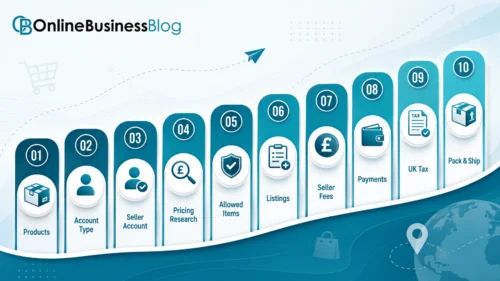
Starting an eBay business becomes easier when the process is divided into manageable stages.
| Step | What You Need to Do |
| Choose What to Sell | Pick products or a niche and check whether there is sufficient buyer demand |
| Select an Account Type | Decide whether you need a personal or business eBay account |
| Create Your Seller Account | Register and complete the required identity and business verification |
| Research Products and Prices | Analyse demand, competition and realistic selling prices |
| Check Selling Restrictions | Confirm that your products comply with eBay policies |
| Create Your Listings | Add accurate titles, descriptions, item specifics and photographs |
| Understand Seller Fees | Calculate applicable selling fees before setting your prices |
| Set Up Payouts | Connect and verify a bank account for receiving seller funds |
| Check Tax Responsibilities | Understand whether your selling activity counts as trading |
| Arrange Shipping | Choose packaging, postage, tracking and returns processes |
1. Decide What You Want to Sell
The first decision is choosing what your eBay business will sell.
Some businesses specialise in one category, such as clothing, collectables, electronics or automotive parts. Others start with a broader selection before identifying the products that perform best.
Rather than buying stock simply because it appears inexpensive, consider:
- Buyer Demand – Check whether people are regularly purchasing similar products
- Competition – Look at how many established sellers already offer the same item
- Selling Price – Compare realistic completed-sale prices rather than asking prices alone
- Product Cost – Include the amount paid to source each item
- Shipping Cost – Consider packaging, postage and tracking
- Seller Fees – Account for eBay fees when calculating margins
- Return Risk – Some categories are more likely to generate returns than others
Starting with a manageable quantity of stock can reduce risk while you learn which products work best.
2. Choose Between a Personal and Business eBay Account
Not everyone who sells something on eBay is operating a business.
A personal account may be suitable when occasionally selling unwanted belongings.
However, eBay states that sellers should use a business account when selling large quantities, selling products they have made or purchased specifically for resale, or operating an existing business outside eBay.
If your aim is specifically to build an eBay business and regularly purchase stock for resale, a business account is generally the appropriate option.
3. Create Your eBay Seller Account
After choosing the appropriate account type, register your details and complete eBay’s seller verification process.
Business sellers may need to provide information relating to the business, identity and bank account used for payouts.
Make sure the information provided is accurate and remains up to date. Incorrect bank or business details can create problems when receiving payouts or completing account verification.
4. Research Products and Pricing
Product research should take place before investing heavily in stock.
eBay’s Product Research tool is available through Seller Hub and uses marketplace supply, demand and pricing data. Sellers can use it to examine competing listings, product trends, pricing and sales activity.
Pay particular attention to:
- Average Selling Prices
- Sales Volume
- Sell-Through Potential
- Number of Competing Sellers
- Product Condition
- Postage Costs
- Seasonal Demand
- Successful Listing Formats
Research can also help identify products with high demand but limited supply.
Most importantly, calculate your likely profit after product cost, seller fees, postage, packaging and expected returns rather than focusing only on the difference between the purchase and selling price.
5. Understand What You Can Sell on eBay
Most ordinary consumer products can be sold on eBay, but some products are prohibited while others have restrictions or additional listing requirements.
Depending on the category, restrictions may apply to regulated goods, hazardous products, certain medical products, weapons, adult material, recalled goods and items that infringe intellectual property rights.
Rules can also differ by country.
Before purchasing stock in an unfamiliar or regulated category, check whether the product can legally be sold and whether eBay imposes additional requirements.
This is particularly important when importing products because being able to purchase an item from a supplier does not automatically mean it can be legally or safely resold in the UK.
6. Create and Optimise Your eBay Listings
A good product can still perform poorly if the listing makes it difficult for buyers to understand exactly what they are purchasing.
Start by placing the product in the most accurate category and writing a clear title that describes the item.
A strong listing should include:
- Accurate Product Title
- Relevant Item Specifics
- Correct Brand and Model Information
- Accurate Product Condition
- Clear Product Description
- Original High-Quality Photographs
- Realistic Price
- Delivery Information
- Return Information
Avoid keyword stuffing or adding irrelevant brands to listing titles simply to attract additional searches.
Photographs should also accurately show the product’s condition. If you are selling used products, photograph noticeable scratches, marks or defects rather than attempting to hide them.
For some products, fixed-price listings may provide predictable margins, while auctions can suit items where the final market value is difficult to determine.
7. Understand eBay Business Seller Fees
Fees have a direct effect on whether an eBay business is profitable.
Business seller charges can include:
- Final Value Fees
- Per-Order Fees
- Regulatory Operating Fees
- Optional Listing Upgrade Fees
- Advertising Costs
- International Fees Where Applicable
- eBay Shop Subscription Costs
Final Value Fee percentages can vary according to category, and eBay changed several rates during February 2026.
For this reason, calculate fees using the current rates for your category before deciding how much you can afford to pay for stock.
A product selling for £30 is not generating a £30 return. Your actual margin needs to account for product costs, marketplace fees, postage, packaging, advertising, returns and other operating expenses.
8. Set Up Payments and Payouts
The old process of treating PayPal as the main method for receiving eBay seller payments is no longer accurate.
eBay now manages the end-to-end payment process. Buyers can select from supported payment methods, while seller funds are paid directly into the bank account linked to the eBay account.
Seller Hub can be used to review transactions, payouts, reports and the status of funds.
New sellers should complete verification and check their bank details carefully to reduce the likelihood of payout delays.
9. Understand UK Tax and Business Responsibilities
Selling an unwanted phone, old clothing or furniture from your home does not automatically mean you are operating a taxable business.
The position changes when products are bought, manufactured or acquired with the intention of selling them for profit.
HMRC states that online platforms may be required to collect and report certain information about sellers. Platform reporting itself does not automatically mean that tax is owed, but sellers who are trading still need to meet their normal tax responsibilities.
Individuals should also be aware of the trading allowance. HMRC states that if total trading income exceeds the £1,000 trading allowance for the tax year, the income may need to be reported.
The exact tax position depends on the circumstances, so sellers should check the current HMRC guidance for selling through online platforms or seek professional advice when necessary.
Business sellers must also consider consumer law, returns, product safety and other legal responsibilities that apply to the products they sell.
10. Package and Ship Your Orders
Reliable fulfilment is an important part of building an eBay business.
Use packaging that protects products throughout delivery without adding unnecessary size or weight. Fragile items may require padding and stronger outer packaging, while higher-value products may justify tracked or signed-for services.
Before setting your postage price, consider:
- Parcel Size
- Parcel Weight
- Destination
- Product Value
- Tracking Requirements
- Packaging Cost
- Expected Delivery Time
Tracking information should be uploaded promptly where available so buyers can follow their orders.
As order volumes increase, manually copying customer addresses and creating individual postage labels can become inefficient.
Royal Mail Click & Drop can connect directly with eBay, import orders and help sellers create postage labels and manage dispatch information from one system.
Tips for Running a Successful eBay Business
Starting an account is easy. Building an operation that remains profitable requires more attention to pricing, listings and customer experience.
- Research Before Buying Stock – Use actual marketplace sales data rather than assuming a product will sell
- Calculate Your Real Profit Margin – Include stock, eBay fees, advertising, packaging, postage and potential returns
- Complete Relevant Item Specifics – Detailed information makes it easier for buyers to filter and understand listings
- Use High-Quality Original Photos – Show the actual condition of the product clearly from several angles
- Price Products Competitively – Compare similar sold products rather than simply copying the cheapest active listing
- Dispatch Orders Promptly – Reliable fulfilment can support customer satisfaction and seller performance
- Provide Good Customer Service – Respond clearly to questions and deal with genuine problems professionally
- Monitor Seller Hub Performance – Review sales, selling costs, buyer traffic and other performance information regularly
Seller Hub combines sales, payment, research and performance information, making it useful for identifying which products and listings generate worthwhile results.
Conclusion
Starting an eBay business in 2026 does not require a complicated ecommerce infrastructure, but profitable selling requires more than simply uploading products.
Begin by choosing products with measurable demand, create the correct seller account and research realistic selling prices before purchasing large quantities of stock. Every product should then be priced with seller fees, postage, packaging and potential returns in mind.
The marketplace itself continues to change.
Fee adjustments, new listing requirements, eBay International Shipping and other seller tools introduced during 2026 show why businesses should periodically review eBay’s current policies instead of relying on processes that were accurate several years ago.
Starting small also gives you an opportunity to understand buyer behaviour and refine your operation before committing more money to stock. As sales increase, Seller Hub, Product Research and shipping integrations can help make the business easier to manage.
Frequently Asked Questions
Is It Free to Start Selling on eBay?
Creating an account does not necessarily mean paying an upfront business setup fee, but seller fees can apply when products are listed or sold depending on the account, category and services used.
Do I Need a Business Account to Sell on eBay?
Not for occasional sales of personal belongings. However, sellers buying or making products for resale, selling large quantities or operating an existing business should generally register as business sellers.
How Much Does It Cost to Sell on eBay UK?
Costs vary by product category and may include Final Value Fees, per-order charges, regulatory fees, advertising and optional Shop subscriptions.
Do I Need to Pay Tax on eBay Sales in the UK?
Not every eBay sale is taxable. Selling personal possessions differs from regularly buying or making products with the intention of selling them for profit.
What Are the Best Products to Sell on eBay?
There is no single best product. Look for items with consistent demand, manageable competition, sensible shipping costs and enough margin after all expenses.
How Do eBay Sellers Get Paid?
eBay manages buyer payments and sends available seller funds to the verified bank account connected to the seller’s account.
Can I Start an eBay Business With No Money?
You can begin with very little capital by selling suitable items you already own, but building a consistent reselling business normally requires money for stock, packaging, postage and other operating costs.
What Are the Latest eBay Changes in 2026?
Important changes include updated business seller fees, new Apparel and Footwear sizing requirements, additional delivery protections and the phased introduction of eBay International Shipping in the UK.
