


Post Contents
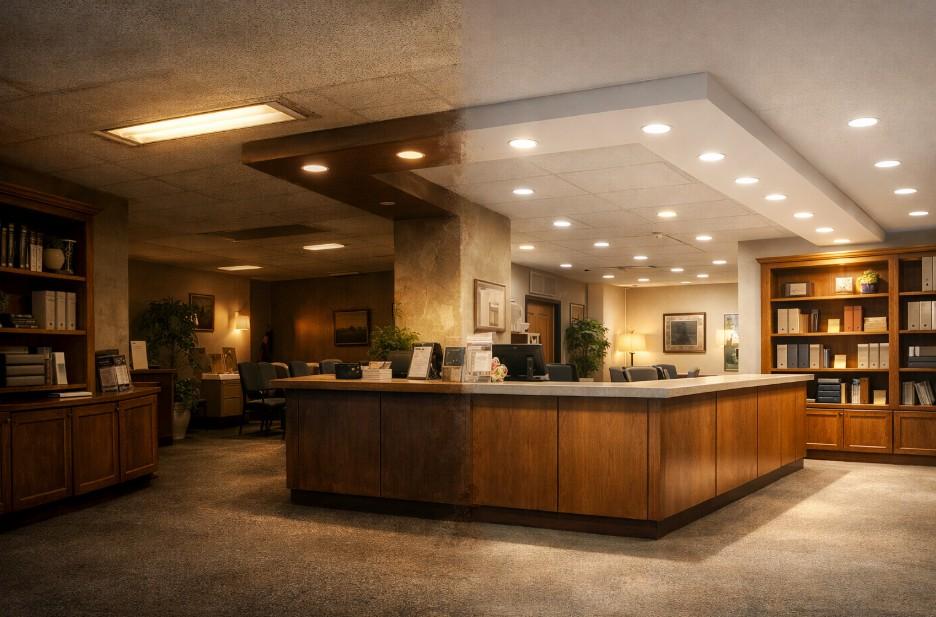
There is constant pressure on commercial property owners to modernise while remaining competitive. A complete overhaul of an old building can be expensive and disruptive, but lighting restoration is an efficient. sustainable alternative.
It preserves character, reduces waste, saves energy and improves the quality of interior built environments.
What Is Lighting Restoration?
The restoration of lighting is a way to rejuvenate existing fixtures rather than replacing them. It entails the refurbishment of outdated fittings with a mixture of reused, repaired and new components, often with the integration of LED technology and smart controls.
Many construction and refurbishment projects still subscribe to the throwaway culture that holds that failing products are worthless and should be discarded.
In contrast, restoration extends the useful life of existing infrastructures, in keeping with the principles of the circular economy, which prioritises reuse, repurposing, repair and responsible disposal.
How Can Lighting Restoration Revive Aging Commercial Spaces?
Environmental and Sustainability Benefits

One of the most compelling reasons to opt for restoration in commercial spaces is the positive impact it has on the environment. The traditional manufacture of lighting fixtures greedily consumes energy and raw materials with the attendant by-products of greenhouse gas emissions and industrial waste.
The restoration of existing lighting significantly lessens this impact by conserving materials and cutting demand for new production.
Restoration also adheres to a hierarchy of waste: reuse first, repair second, salvage third and only then discard and replace. Even disposal complies with standards like the WEEE Directive, for the responsible handling of electronic waste.
Economic Advantages and Cost Savings
Lighting restoration cuts costs for owners of commercial property. By retrofitting old fixtures with LEDs, they can reduce energy usage by up to 75%.
LED technology also has an extended operational life, often longer than 50,000 hours, which reduces the frequency of replacement, maintenance costs and disruption to the building’s occupants.
Brighter, consistent and more controlled lighting quality can also improve safety, productivity and comfort in office, retail sites and many other commercial settings. Smart lighting systems are also growing in popularity.
They combine LED efficiency with controls such as motion sensors, daylight harvesting and automated scheduling. These measures ensure that lighting is only activated when it is needed.
Preserving Character and Aesthetic Value
In many commercial spaces, especially older ones, the original lighting fixtures are integral to the identity of the building. They tend to include traditional chandeliers, sconces and vintage industrial lamps.
There is an alternative to the replacement of these unique pieces with characterless modern equipment. Lighting fixtures can be restored to preserve historical character while at the same time improving functionality.
Its combination of modern performance and classic design promotes both sustainability and aesthetic integrity.
Preserving the character of a building can also create a better environment for clients and employees. Modern restoration techniques can even incorporate bespoke elements, such as diffusers or finishes that are designed to complement brand identity and themed interiors.
Supporting Sustainability Goals and Compliance

Environmentally responsible performance is a major focus of today’s regulatory frameworks, putting businesses under pressure to demonstrate their compliance. The restoration of existing lighting contributes to broader sustainability strategies, helping organisations to reduce their carbon footprints and meet national and international targets, such as the UN’s Sustainable Development Goals.
Businesses using lighting restoration can lower emissions and apply for green building certifications such as LEED and BREEAM, which heightens their reputation and gives them a competitive advantage in client tenders.
A Scalable, Future-Proof Solution
One of the many advantages of restored lighting is its scalability. Whether the work is limited to a single flagship office or spread across a portfolio of retail outlets and warehouses, restoration can be matched to budget, schedules and operational requirements. Many businesses pursue phased sustainability, starting with high-impact areas and then expanding across their other facilities.
Since this approach uses existing infrastructure, it minimises the disruption that often accompanies full-system replacements, which is an important consideration in spaces that must remain open and productive throughout the refurbishment.
The Many Benefits of Lighting Restoration
Lighting restoration encompasses environmental stewardship, financial judgment, and design integrity. Many commercial spaces are caught between the rock of ageing infrastructure and the hard place of rising sustainability demands.
Restoration gives them an effective way out of the trap. By extending the life of existing lighting systems, businesses can reduce waste, lower costs, improve interiors and contribute to corporate sustainability goals. Restoration lights the way to a brighter, greener future.
