



Post Contents
The best credit-building credit cards in the UK in 2026 include the Tesco Bank Foundation Credit Card, Barclaycard Forward, Capital One Classic, Marbles, Vanquis Credit Builder, Aqua Classic, Asda Money Select, Ocean Credit Card, Zable Credit Card and 118 118 Money Credit Builder Credit Card.
The right option depends on your circumstances rather than simply which card has the lowest advertised APR.
- Best Overall: Tesco Bank Foundation Credit Card
- Best For Rate Reductions: Barclaycard Forward
- Best For Flexible Credit Limits: Capital One Classic
- Best For Straightforward Eligibility Checking: Marbles
- Best For Rebuilding Credit: Vanquis Credit Builder
- Best For Credit-Building Tools: Aqua Classic
- Best For Rewards: Asda Money Select
- Best For Broader Credit Histories: Ocean Credit Card
- Best For App-Based Credit Building: Zable Credit Card
- Best Alternative For Limited Options: 118 118 Money Credit Builder
A credit builder card does not improve your credit score simply because you own one. Building a stronger history depends on making payments on time, staying within the limit and managing your overall borrowing responsibly.
Last Updated: September 2026
What Is a Credit-Building Credit Card?
A credit-building credit card is designed for people with a limited, thin or damaged credit history who may find it harder to qualify for mainstream credit cards.
These cards usually come with lower starting credit limits and higher representative APRs, but they can provide a practical way to demonstrate responsible borrowing when managed carefully.
Using the card for affordable purchases, making every payment on time and staying comfortably within the credit limit can help create a stronger repayment history over time.
However, simply opening a credit builder card will not automatically improve your credit score. Missed payments, high balances or exceeding the credit limit can have the opposite effect.
How To Choose The Best Credit Building Credit Card?
The best credit-building credit card depends on your current credit profile, spending habits and the terms you are offered.
Rather than choosing a card only because it has a high credit limit or rewards, compare the overall cost and features that can help you manage credit responsibly.
Important factors to consider include:
- Representative APR: A lower APR can reduce interest costs if you carry a balance
- Credit Limit: Choose a limit that is manageable for your normal spending
- Annual Fee: Many credit builder cards have no annual fee
- Eligibility Checker: A soft search can help you check your chances before making a full application
- Credit Monitoring: Some cards provide credit score tracking or personalised credit-building tools
- Account Alerts: Payment and spending notifications can help prevent missed payments or overspending
- Rewards: Cashback or loyalty points can provide extra value but should not encourage unnecessary spending
Where possible, check eligibility before applying and compare the actual APR and credit limit offered to you, as these can differ from the headline representative terms.
Top 10 Best Credit Building Credit Cards In The UK
1. Tesco Bank Foundation Credit Card – Best Overall
The Tesco Bank Foundation Credit Card is one of the strongest all-round credit-building options for people who are new to credit or are trying to improve an existing poor credit history.
It currently has a 29.9% representative variable APR and starting credit limits between £200 and £1,500.

Customers can also access Tesco Bank CreditView, provided by TransUnion, for three years from account opening.
Cardholders can earn Clubcard points on eligible spending, giving it an extra feature that many specialist credit-builder cards do not provide.
Key Features:
- Starting Credit Limit Of £200 To £1,500
- 9% Representative Variable APR
- Credit Score Tracking Through CreditView
- Clubcard Points On Eligible Purchases
- Eligibility Check Without Affecting Your Credit Score
- Potential Credit Limit Increases With Responsible Management
Best For: People wanting a relatively competitive credit-builder APR alongside credit monitoring and rewards.
Consider Another Card If: Tesco’s eligibility checker indicates that acceptance is unlikely.
2. Barclaycard Forward – Best For Reducing Your Rate Over Time
Barclaycard Forward combines credit building with one of the more unusual features in this market: the opportunity to reduce the card’s interest rate through responsible repayment behaviour.
The card currently carries a 33.9% representative variable APR with personalised limits between £50 and £1,200.
Barclaycard says customers who make all required payments on time during the first year can receive a three percentage-point interest rate reduction.
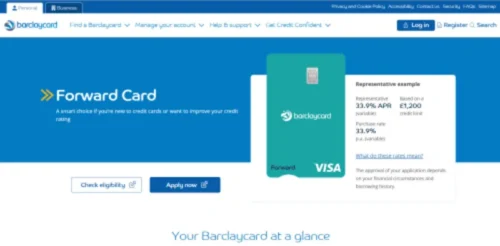
Keeping up the required payment behaviour during the second year can result in another two percentage-point reduction.
It also currently includes six months at 0% on purchases and six months at 0% on qualifying balance transfers, although a balance-transfer fee applies.
Key Features:
- Credit Limits From £50 To £1,200
- 9% Representative Variable APR
- Potential Rate Reductions
- Six-Month Introductory Purchase Offer
- Six-Month Balance Transfer Offer
- Eligibility Checker Available
Best For: New borrowers who want an incentive for maintaining reliable repayments.
Consider Another Card If: You need a higher initial credit limit.
3. Capital One Classic – Best For Flexible Credit Limits
Capital One Classic is aimed at people looking to build or rebuild their credit history and currently offers starting limits between £200 and £4,000, subject to individual circumstances.
Its representative APR is 34.9% variable.

Capital One also provides QuickCheck, which can tell applicants whether they will be accepted without the initial eligibility check affecting their credit score.
Responsible account management may also lead to opportunities for credit-limit increases.
Key Features:
- £200 To £4,000 Starting Credit Limit
- 9% Representative Variable APR
- No Annual Fee
- QuickCheck Eligibility Tool
- Potential Credit Limit Increases
- Mobile Account Management
Best For: Borrowers wanting greater potential flexibility with their credit limit.
Consider Another Card If: You have no UK credit history at all, as eligibility may be more limited depending on your circumstances.
4. Marbles Credit Card – Best For Straightforward Credit Building
Marbles provides a relatively simple credit-building card with a starting credit limit between £250 and £1,500.
The representative APR is currently 34.9% variable, with no annual fee.

Its FastCheck service allows applicants to assess their likelihood of acceptance before completing a full application.
This can be particularly useful for someone trying to avoid several unsuccessful applications in a short period.
Key Features:
- £250 To £1,500 Starting Limit
- 9% Representative Variable APR
- No Annual Fee
- FastCheck Eligibility Tool
- Online Account Management
- Potential Credit Building With Responsible Use
Best For: Borrowers wanting a straightforward card without complicated reward structures.
Consider Another Card If: You want credit-score tracking or stronger rewards built into the card.
5. Vanquis Credit Builder Credit Card – Best For Rebuilding Credit
Vanquis has long specialised in customers who may not qualify for conventional mainstream credit cards.
Its Credit Builder Credit Card currently advertises personalised credit limits between £250 and £2,500 and a 37.9% representative variable APR.

Vanquis also offers a soft eligibility check, allowing potential applicants to assess their chances before completing a full application.
Key Features:
- £250 To £2,500 Personalised Credit Limit
- 9% Representative Variable APR
- Soft Eligibility Check
- App-Based Account Management
- Potential Credit Limit Reviews
- Designed For Credit Building
Best For: People rebuilding after previous problems with credit.
Consider Another Card If: You qualify for a substantially lower representative APR elsewhere.
6. Aqua Classic – Best For Credit-Building Tools
Aqua Classic combines a credit card with tools intended to help customers understand and improve their credit behaviour.
The card currently offers initial limits between £250 and £1,500, no annual fee and a 39.9% representative variable APR.

Its Aqua Coach service provides credit-building support, while customers can also monitor their credit score through the app.
Aqua’s SafeCheck can indicate eligibility without affecting the applicant’s credit score.
Key Features:
- £250 To £1,500 Starting Limit
- 9% Representative Variable APR
- No Annual Fee
- Free Credit Score Access
- Aqua Coach Credit-Building Support
- SafeCheck Eligibility Tool
Best For: People who want additional tools to monitor their progress.
Consider Another Card If: You expect to regularly carry a balance because the APR can make borrowing expensive.
7. Asda Money Select Credit Card – Best For Rewards
The Asda Money Select Credit Card is specifically marketed towards people looking to build their credit score while also earning rewards.
Its current representative APR is 39.8% variable and there is no annual fee.
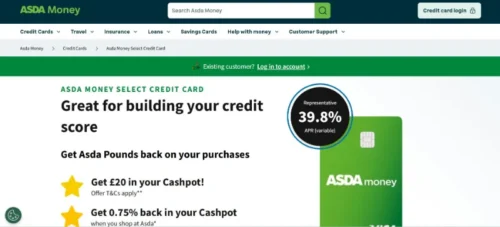
Customers can earn additional Asda Pounds when shopping at Asda and a smaller amount on eligible spending elsewhere.
The card also allows applicants to check eligibility before making a full application.
Key Features:
- 8% Representative Variable APR
- No Annual Fee
- Asda Pounds On Eligible Spending
- Eligibility Checking Available
- Personalised Credit Limit
- App-Based Spending Notifications
Best For: Regular Asda shoppers who want rewards while establishing a stronger credit record.
Consider Another Card If: Rewards could encourage you to spend more than you would normally spend.
8. Ocean Credit Card – Best For Broader Credit Histories
The Ocean Credit Card is marketed towards people across a range of credit situations, including those who may previously have struggled to get mainstream credit.
Its representative APR is currently 39.9% variable.
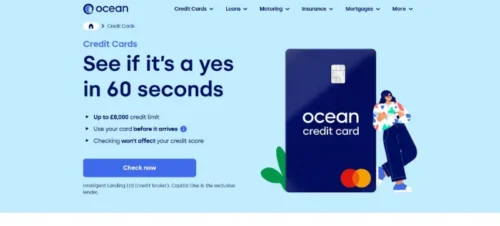
Potential applicants can perform an eligibility check before formally applying.
Ocean’s credit-builder information also stresses that staying within the limit and paying on time are central to building a better credit history.
Key Features:
- 9% Representative Variable APR
- Personalised Credit Limit
- Eligibility Check Without Affecting Your Score
- Designed For A Range Of Credit Histories
- App-Based Account Management
- Potential Credit Limit Reviews
Best For: Applicants who have previously struggled to qualify for mainstream cards.
Consider Another Card If: A lower-APR specialist card is available to you.
9. Zable Credit Card – Best For App-Based Credit Building
Zable offers app-focused credit cards designed to help customers establish or improve their credit profile.
Its range includes different card offers, so the exact APR and limit offered can vary significantly according to eligibility.
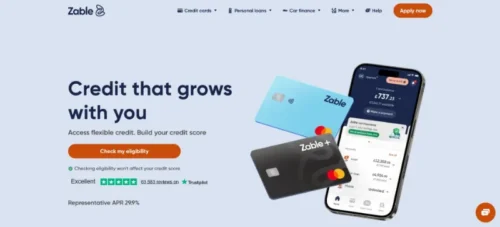
Its dedicated credit-building option currently shows a representative APR that can be considerably higher than its lower-rate Zable+ product.
Zable lets applicants check eligibility without affecting their credit score and offers tools for monitoring spending and credit progress through its app.
Key Features:
- Eligibility Check Without Affecting Credit Score
- Personalised APR And Credit Limit
- Credit Score Monitoring
- App-Based Spending Management
- Potential Credit Limit Reviews
- No Annual Fee On Current Card Range
Best For: Digital-first users who want to manage most aspects of credit building through an app.
Consider Another Card If: You are offered one of Zable’s higher APRs and expect to carry a balance.
10. 118 118 Money Credit Builder Credit Card – Best Alternative For Limited Options
The 118 118 Money Credit Builder Credit Card is aimed at people with limited or less-than-perfect credit histories who may have fewer mainstream options.
The current representative APR is 49.0% variable, making it one of the more expensive cards in this comparison if a balance is carried.
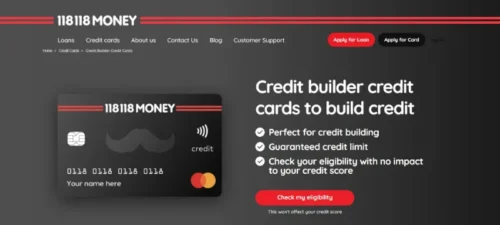
Applicants can check eligibility and see a likely credit limit before proceeding to the full application.
Key Features:
- 0% Representative Variable APR
- Personalised Credit Limit
- Pre-Application Eligibility Check
- Credit Limit Shown Before Full Application
- Designed For Building Credit Habits
- Mobile Account Management
Best For: Applicants who have limited credit-builder options elsewhere.
Consider Another Card If: You qualify for a lower-APR card, particularly if you cannot guarantee clearing the balance each month.
Best Credit Building Credit Cards UK 2026 At A Glance
| Credit Card | Best For | Representative APR | Starting Credit Limit | Annual Fee | Eligibility Check |
| Tesco Bank Foundation | Overall Value | 29.9% Variable | £200–£1,500 | £0 | Soft Check Available |
| Barclaycard Forward | Rate Reductions | 33.9% Variable | £50–£1,200 | £0 | Soft Check Available |
| Capital One Classic | Flexible Limits | 34.9% Variable | £200–£4,000 | £0 | QuickCheck Available |
| Marbles Credit Card | Simple Credit Building | 34.9% Variable | £250–£1,500 | £0 | FastCheck Available |
| Vanquis Credit Builder | Rebuilding Credit | 37.9% Variable | £250–£2,500 | Check Terms | Soft Check Available |
| Asda Money Select | Rewards | 39.8% Variable | Personalised | £0 | Soft Check Available |
| Aqua Classic | Credit Tools | 39.9% Variable | £250–£1,500 | £0 | SafeCheck Available |
| Ocean Credit Card | Wider Credit Histories | 39.9% Variable | Personalised | £0 | Soft Check Available |
| Zable Credit Card | App-Based Management | Up To 48.9% Variable Depending On Product | Personalised | £0 | Soft Check Available |
| 118 118 Money Credit Builder | Alternative Option | 49.0% Variable | Personalised | £0 Annual Fee | Soft Check Available |
Representative APRs are useful for comparison but do not necessarily represent the exact rate every applicant will receive.
Credit limits, APRs and acceptance depend on individual circumstances and eligibility.
Current provider information confirms Tesco Foundation at 29.9%, Barclaycard Forward at 33.9%,
Capital One Classic and Marbles at 34.9%, Vanquis at 37.9%, Asda Select at 39.8%, Aqua and Ocean at 39.9%, with specialist Zable and 118 118 Money products potentially carrying higher rates.
How We Chose The Best Credit-Building Credit Cards?
There is no single credit builder card that will be best for every applicant.
This comparison considers several factors that affect the usefulness and cost of each card.
These include:
- Representative APR: Lower rates can reduce borrowing costs when a balance is carried
- Starting Credit Limit: Smaller limits can make spending easier to control, while greater flexibility may suit some borrowers
- Annual Fees: Cards without annual fees can be simpler and cheaper to maintain
- Eligibility Checks: Soft searches allow people to assess their chances before formally applying
- Credit-Building Features: Score monitoring, alerts and coaching tools can help users understand their borrowing behaviour
- Rewards: Cashback or loyalty points may provide extra value when spending is already planned
- Account Controls: Apps, payment alerts and spending notifications can make managing repayments easier
The order is an editorial comparison rather than personal financial advice. Acceptance, APR and credit limit depend on individual circumstances.
Who Are Credit Building Credit Cards Best For?
Credit builder cards are primarily intended for people who cannot easily qualify for the cheapest mainstream cards.
They can be particularly useful for:
- People With Limited Credit History: Young adults or first-time borrowers may have little information on their credit reports
- People Rebuilding Credit: Previous missed payments or other financial difficulties can reduce access to mainstream borrowing
- People New To The UK: Overseas credit histories generally do not automatically create a UK borrowing record
- People Previously Declined For Mainstream Cards: Specialist providers may use different eligibility criteria
- People Trying To Establish Consistent Repayment History: Regular on-time repayments can demonstrate responsible credit management
A credit-builder card may not be appropriate if you are already struggling to meet essential household expenses or existing debt repayments.
Credit Builder Card Eligibility Comparison
Providers use their own lending criteria, so qualifying for one card does not mean you will qualify for another.
| Factor | Why It Matters |
| Age | Applicants Generally Need To Be At Least 18 |
| UK Residency | Most Cards Require Permanent UK Residency |
| Income | Some Providers Apply Minimum Income Requirements |
| Existing Debt | High Existing Borrowing Can Affect Affordability |
| Credit History | Missed Payments, Defaults And Other Problems Can Influence Acceptance |
| Bankruptcy Or IVA | Some Providers Restrict Applications |
| Recent Applications | Multiple Recent Applications May Affect Lending Decisions |
| Electoral Roll | Registration Can Help Confirm Your Identity And Address |
Use eligibility checkers wherever possible before making formal applications.
Soft Search Vs Hard Search: What Is The Difference?
An eligibility check normally uses a soft credit search. This allows the provider to assess information from your credit file without leaving the same type of visible application footprint as a full application.
A formal credit-card application normally involves a hard search.
| Check | Visible To Other Lenders? | Can Affect Lending Decisions? | Typical Use |
| Soft Search | Generally No | Usually No Direct Impact | Eligibility Checking |
| Hard Search | Yes | Potentially | Full Application |
Checking eligibility with several providers is therefore generally preferable to submitting multiple full applications.
How Do Credit Building Credit Cards Work?
A credit builder card works broadly like an ordinary credit card.
The provider gives you a credit limit. You can spend up to that limit and receive a monthly statement showing the balance and minimum required payment.
Your account activity can then become part of your credit history.
Responsible behaviour may include:
- Making Payments By The Due Date
- Staying Within The Credit Limit
- Keeping Borrowing Manageable
- Avoiding Repeated Cash Withdrawals
- Paying More Than The Minimum Where Affordable
- Clearing The Full Statement Balance Whenever Possible
Missing payments or exceeding the limit can have the opposite effect and make obtaining credit harder.
How To Use A Credit Builder Card To Improve Your Credit?
Getting the card is only the first step. How you manage it determines whether it helps or harms your credit history.
Pay On Time
Payment history is an important part of how lenders assess borrowers. Setting up a Direct Debit can reduce the risk of forgetting a payment.
Pay In Full Where Possible
You do not need to pay interest to build credit.
If you spend £60 during the month and can comfortably afford it, paying the entire £60 statement balance is usually better than deliberately leaving part unpaid.
Keep Your Balance Manageable
Try not to regularly use most or all of the available credit limit.
Avoid Cash Withdrawals
Credit-card cash withdrawals can attract fees and interest and may be interpreted differently from ordinary spending by lenders.
Avoid Repeated Applications
Submitting several full applications in a short period creates multiple hard searches, which can make it appear that you are urgently seeking credit.
How Long Does It Take To Build Credit With A Credit Card?
There is no guaranteed timeframe because lenders use different scoring and affordability models.
First 1–3 Months
Your first statements begin creating a record of how you manage the account. Pay every statement on time and remain within the limit.
Around 3–6 Months
Several months of consistent account management may provide more evidence of responsible borrowing, although it does not guarantee a particular score increase.
Around 6–12 Months
A longer record of reliable payments can strengthen your overall credit history, particularly when other accounts are also managed well.
After a year, it may be worth using eligibility checkers to see whether lower-APR mainstream products have become available.
Avoid closing or applying for accounts purely to chase a particular credit score. Lenders assess much more than the headline score shown in a consumer app.
How Much Of Your Credit Limit Should You Use?
Credit utilisation measures how much of your available revolving credit you are using.
For example, with a £500 credit limit:
| Balance | Credit Utilisation |
| £50 | 10% |
| £125 | 25% |
| £250 | 50% |
| £450 | 90% |
Lower utilisation can indicate that you are not heavily dependent on available credit.
There is no universal utilisation percentage that guarantees approval or a better credit score. Different lenders and credit reference agencies use different models.
A useful approach is simply to keep balances comfortably below the limit and avoid spending purely to create credit activity.
Do You Need To Carry A Balance To Build Credit?
No. Carrying a balance and paying interest is not necessary to build credit.
A common misconception is that lenders need to see interest payments before they consider someone a responsible borrower.
What matters is demonstrating that credit can be managed reliably.
For example, using a card for a regular £30 subscription and then paying the full statement balance on time can create repayment history without deliberately paying purchase interest.
What Does Representative APR Mean?
Representative APR provides a standard way to compare borrowing costs across different products.
However, the advertised representative rate is not necessarily the APR every successful applicant will receive.
A card advertised at 39.9% representative APR may offer an individual applicant different terms based on factors such as:
- Credit History
- Income
- Existing Borrowing
- Affordability
- Previous Repayment Behaviour
- Information In The Application
This is why checking the actual APR offered to you matters more than choosing a card purely because of its headline marketing rate.
What Are The Benefits And Drawbacks Of Credit Building Credit Cards?
Benefits
- Can Build Credit History: Responsible management creates evidence of borrowing behaviour
- Potentially Easier To Qualify For: Specialist cards can consider customers outside mainstream lending criteria
- Soft Eligibility Checks: Many providers allow applicants to check their chances before applying
- Spending Controls: Lower limits can reduce the risk of taking on very large balances
- Additional Tools: Some cards include score tracking, reminders and credit-building guidance
Drawbacks
- High APRs: Credit builder cards are often expensive when balances are carried
- Lower Initial Limits: Starting limits may be much smaller than mainstream cards
- No Guaranteed Score Increase: Simply opening an account does not guarantee improvement
- Missed Payments Can Cause Harm: Poor account management can damage rather than improve credit
- Cash Withdrawals Can Be Expensive: Fees and immediate interest may apply
What Mistakes Can Damage Your Credit Score?
A credit-building card can work against you when it is poorly managed.
Common mistakes include:
- Missing A Payment: Late or missed payments can remain visible on your credit history
- Going Over the Credit Limit: This can indicate difficulty controlling borrowing
- Using Nearly All Available Credit: Persistent high utilisation can concern lenders
- Submitting Multiple Applications: Several hard searches within a short period may reduce your chances of approval
- Withdrawing Cash Frequently: Cash advances tend to be expensive and may be viewed less favourably
- Only Making Minimum Payments: This can keep debt outstanding for a long time and significantly increase interest costs
- Increasing Spending After A Limit Increase: A higher limit should not automatically mean higher spending
Can You Get A Credit Building Card With Bad Credit?
Potentially, yes.
Credit building cards are designed partly for consumers who have limited or imperfect borrowing histories. However, “bad credit” can cover many different situations.
Someone with one old missed payment may be assessed very differently from someone currently behind on several debts.
Factors that can affect acceptance include:
- Recent Missed Payments
- Defaults
- County Court Judgments
- Bankruptcy
- Individual Voluntary Arrangements
- Existing Debt Levels
- Income And Affordability
- Recent Credit Applications
An eligibility checker is particularly valuable for someone with adverse credit because it can show the likelihood of acceptance without immediately making another full application.
Do not assume that a card advertised for poor credit means guaranteed approval.
What Should You Do Once Your Credit Score Improves?
A credit builder card is often a stepping stone rather than the card you keep using for expensive borrowing indefinitely.
Once your overall credit position has improved:
- Review Your Credit Reports: Check that the information held about you is accurate.
- Use Eligibility Checkers: Find out whether you now qualify for lower-rate products.
- Compare APRs and Features: A mainstream card may offer cheaper borrowing or better benefits.
- Avoid Several Applications At Once: Apply selectively.
- Continue Paying Existing Accounts Properly: Good habits remain important even after your score improves.
- Consider Old Accounts Carefully: Closing an old account can reduce your total available credit, while keeping unnecessary accounts open can also create risks. Consider your overall circumstances.
A higher consumer credit score does not automatically mean you should borrow more.
Alternatives To Credit Building Credit Cards
A credit card is not the only way to establish a stronger financial record.
Alternatives and complementary steps include:
- Registering To Vote At Your Current Address If Eligible
- Checking All Three Credit Reports For Errors
- Maintaining A Stable Current Account
- Paying Mobile Phone Contracts On Time
- Paying Other Credit Agreements Reliably
- Reducing Existing Revolving Balances
- Avoiding Unnecessary Credit Applications
- Using Specialist Credit-Building Products Where Appropriate
Someone already struggling with debt should prioritise affordability and debt support rather than opening additional borrowing simply to improve a credit score.
Final Thoughts
The best credit-building credit card is not necessarily the one offering the biggest credit limit.
A card with manageable limits, an affordable structure, a useful eligibility checker and tools that encourage reliable repayments can be more valuable.
For many borrowers, Tesco Bank Foundation, Barclaycard Forward and Capital One Classic stand out because of their combination of current APRs, credit-building features and account controls.
Aqua, Vanquis, Marbles, Asda Select, Ocean, Zable and 118 118 Money broaden the options for people with different credit histories.
Whatever card you choose, the most effective strategy is simple: use only what you can afford, make every payment on time, stay within the limit and clear the balance in full whenever possible.
Credit is subject to status and affordability. Representative APRs, limits, promotional periods and eligibility requirements can change.
This content is general information and does not constitute personalised financial advice.
Best Credit Building Credit Cards FAQs
What Is The Best Credit Building Credit Card In The UK?
There is no single best card for everyone. Tesco Bank Foundation is a strong all-round option in 2026 because of its 29.9% representative APR, starting limits from £200 to £1,500,
CreditView access and Clubcard rewards. Eligibility still depends on individual circumstances.
Which Credit Card Builds Credit The Fastest?
No particular card can guarantee faster credit improvement.
Payment history, credit utilisation, existing debts, account age and other information on your credit report all influence lending decisions.
Can I Get A Credit Builder Card With Bad Credit?
Yes, some credit builder cards are specifically designed for limited or damaged credit histories.
However, acceptance is not guaranteed. Checking eligibility before formally applying can reduce unnecessary hard searches.
Can I Get A Credit Builder Card With No Credit History?
Potentially. Some specialist credit-builder cards accept applicants with limited credit histories.
People new to the UK or first-time borrowers should compare eligibility criteria carefully because individual providers assess thin credit files differently.
How Long Should I Keep A Credit Building Card?
There is no fixed period. Many people use one while establishing a consistent repayment history and later check whether they qualify for a cheaper mainstream card.
Avoid closing or replacing accounts purely to manipulate a credit score.
What Credit Utilisation Is Best For Building Credit?
There is no universal percentage that guarantees a better credit score.
Keeping balances relatively low compared with your total available limit and avoiding consistently maxing out cards is generally more sustainable.
Does Paying A Credit Card In Full Build Credit Faster?
Paying the statement balance in full does not guarantee that your score will improve faster, but it can demonstrate responsible repayment while helping you avoid purchase interest.
You do not need to carry debt from month to month to build credit.
